
Billion Dollar Babies

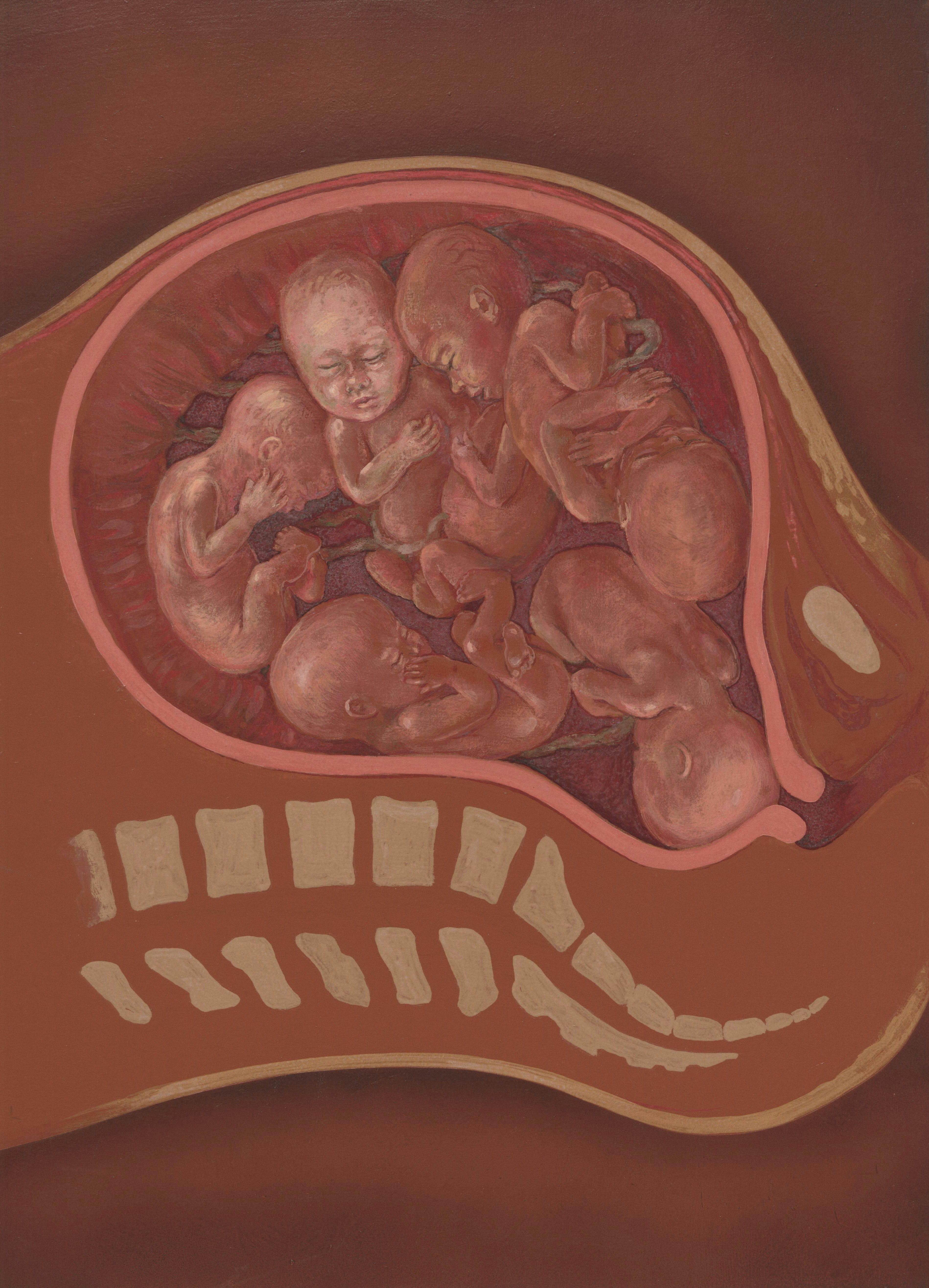
If I were to announce to my family and friends when I turn sixty-five that I am expecting twins—let alone quadruplets—they would think I had completely lost my mind.
Yet, this was the reality for a woman named Annegret Raunigk, a 65-year-old German schoolteacher and mother of thirteen, who made headlines after becoming pregnant with quadruplets. According to reports, her youngest child—a nine-year-old she gave birth to at age fifty-five—began pestering her for a younger sibling. Apparently, her twelve older siblings and various nieces and nephews weren’t enough company.
Because reproductive medicine laws in Germany strictly banned egg donation and multiple embryo transfers of this nature, Raunigk bypassed domestic restrictions by traveling to Ukraine to undergo In Vitro Fertilization (IVF). Commercial fertility tourism allowed her to circumvent safeguards. The procedure utilized both donor eggs and donor sperm.
The Legacy of Octomom
Raunigk’s story evokes memories of Nadya Suleman, the infamous “Octomom.” In January 2009, Suleman—already a single mother to six children conceived through In Vitro Fertilization (IVF)—gave birth to octuplets. The aftermath was a public train wreck. Tabloids detailed a life of government assistance, financial desperation, and eventual welfare fraud charges stemming from adult film work. At one point, a stressed Suleman reportedly described her infants as “disgusting” and her older children as “animals.”
While it’s easy to point fingers at the parents, the deeper question lies with the medical establishment. What kind of fertility specialist sees a single mother of six and decides to implant eight embryos? What doctor looks at a 65-year-old woman and agrees to implant four donor embryos?
While we don’t know Raunigk’s exact financial situation, we do know the physical toll of raising quadruplets in retirement. It seems highly likely that her older, adult children were effectively drafted into service as caretakers for this new brood. That is, after her preemies born at just twenty-six weeks gestation, weighing between 1 lb. 7 oz. and 2 lbs. 2 oz., spent months in intensive care. Raunigk was released from the hospital after forty-eight hours.
An Unfair System: A Personal Reflection
This medical recklessness feels like a slap in the face to those of us who have navigated the grueling world of fertility and family planning.
Years ago, I started the IVF process. After thousands of dollars in hormone injections, endless clinic visits, and emotional highs and lows, my treatment was abruptly canceled. My specialist informed me that they would not proceed unless at least four healthy eggs could be extracted.
The hypocrisy is glaring. A clinic will happily crush a regular person’s dream of parenthood because they don’t meet a statistical protocol—a protocol heavily driven by success rates, business metrics, and profit margins. Yet, that same industry will simultaneously look the other way and place women and babies at extreme medical risk by creating multiple pregnancies.
The Adoption Double Standard
As someone who has adopted more than once, I know firsthand how grueling the process can be. Adoption is intentionally arduous. It involves home studies, background checks, and endless invasive requirements to prove you are mentally, physically, and financially capable of raising a child.
Why aren’t similar, strict psychological and financial protocols in place for those agreeing to the implantation of high numbers of embryos?
The Ultimate Irony
If Annegret Raunigk had the financial means to pay for international IVF and the impending costs of quadruplets, she certainly could have afforded to adopt an older child to give her nine-year-old a sibling.
But here’s the rub: No legitimate adoption agency, birth parent, or country would ever approve a 65-year-old to adopt a child.
The adoption system prioritizes the long-term well-being of the child. The multi-billion-dollar reproductive technology industry, however, often prioritizes the desires of the paying adult. It says volumes about our current society that while the state strictly guards who is allowed to adopt a life, there are much looser boundaries on what a person can have created in a lab—despite age, the risk, or the cost.
I enjoy Christine's work tremendously. Thank you for bringing such thoughtful subject matter to us!